
If a dental supplier asks for the final balance before shipment, the buyer should not rely on a short message saying that the goods are ready. Before releasing final payment, the buyer should request structured evidence: updated order status, product and model confirmation, quantity records, packing details, commercial documents, pre-shipment inspection evidence when appropriate, and loading records if the goods are already moving toward shipment. Buyers who already see vague replies or shifting shipment dates may also need dental order follow-up support in China before they release the balance. The purpose is not to prove that every technical or regulatory requirement has been satisfied. The purpose is to reduce blind spots while the buyer still has commercial leverage.
This guide is for overseas dental distributors, importers, procurement teams, private-label brands and other organizations buying dental equipment or dental products from China. It explains what evidence to request, how to compare it, which warning signs matter, and when remote follow-up is not enough. It also explains the limits of final-payment evidence, because documents, photos and inspection records can support a decision but cannot replace laboratory testing, certification, legal advice, customs advice or destination-market regulatory review.
Key Takeaways
- Final payment evidence should connect the supplier, product model, order quantity, packaging, shipment documents and loading status into one consistent record.
- Supplier photos are useful only when they show identifiable products, labels, quantities, timestamps or order references; generic warehouse photos are weak evidence.
- A packing list and commercial invoice help organize shipment information, but they do not independently prove that the goods inside every carton match the buyer’s order.
- Pre-shipment inspection is most useful before the buyer releases the balance, because the supplier still has a practical reason to correct visible issues.
- Carton counts, pallet photos, container loading photos and seal numbers help preserve a shipment record, especially when damage, shortage or mismatch is discovered later.
- Evidence collection does not guarantee compliance, safety, delivery timing, customs clearance or compensation. It supports a clearer buyer decision and a better issue record.
Why Final Payment Is a Risk Point
The final payment is often the last moment when a buyer can ask for correction, clarification or additional evidence before goods leave the supplier’s control. After the balance is released, the buyer may still have contractual rights, but the practical leverage changes. The goods may be packed, moved to a forwarder warehouse, loaded into a container or handed over to the carrier. If an issue is found after that point, it may be harder to confirm whether the problem came from production, packing, loading, inland handling, ocean transport or destination handling.
Dental orders can be especially difficult to judge from a distance because they often combine several evidence types. A dental chair order may include the chair unit, stool, operating light, tubing, optional accessories, upholstery color, carton marks, spare parts and user documents. A handpiece order may involve connector type, model, packaging, private-label marks, batch information and accessory completeness. A mixed shipment may include products from more than one supplier or production line. Buyers who are still at the supplier-selection stage should first review whether the seller is a real manufacturer or a trading company; the separate guide on factory vs trading company risks in dental sourcing explains that earlier-stage check. The buyer needs a record that ties the shipment back to the purchase order, not just a statement that the goods are ready.
Final payment evidence should therefore answer five practical questions. First, are these the goods the buyer ordered? Second, are the quantities and package counts consistent with the order and packing list? Third, are the visible labels, markings and documents consistent with the agreed product and buyer requirements? Fourth, are the goods packed and staged in a way that can be reasonably traced to the shipment? Fifth, if there is a dispute later, will the buyer have enough records to explain what was accepted before payment and what changed afterward?
This is not the same as proving product compliance or performance. A document may look consistent but still need verification by a qualified regulatory adviser, notified body, accredited laboratory, customs broker or destination-market specialist. A product may pass a visible inspection but still require technical tests that cannot be performed during a buyer-side shipment check. The evidence file helps the buyer make a better commercial decision, but it should not be treated as a certificate.
The Evidence File a Buyer Should Build
A useful final-payment evidence file should be organized around the order, not around whatever the supplier happens to send. The buyer should create one folder for the order and keep a simple index: purchase order, pro forma invoice, supplier confirmation, product specifications, approved sample or approved photos, commercial invoice, packing list, inspection record, loading record, bill of lading or booking information when available, and communication history. For broader checklists and buyer tools, Verifiedental keeps related dental sourcing resources for buying from China in one hub.
The key is consistency. The supplier name, product model, quantity, carton count, consignee information, shipping marks and order reference should not drift from one document to another without explanation. A small formatting difference may be harmless, but a different company name, missing model number, changed product description, unexplained quantity difference or new certificate holder can affect the buyer’s ability to trace the shipment. If the buyer waits until after final payment to compare these items, the supplier may be less responsive.
International trade guidance commonly identifies documents such as commercial invoices, packing lists and bills of lading as part of export documentation. These documents are important because they help different parties understand what is being shipped, how it is packed and how the shipment is identified. For a dental buyer, their value is practical: they create a cross-check between the order, the shipment and the records that may be needed by the forwarder, bank, customs broker or internal procurement team.
The evidence file should also include a clear communication trail. If the buyer asks whether the goods are complete, the answer should identify the product, order number, quantity and date. If the supplier says the shipment is packed, the buyer should request packing photos and the latest packing list. If the supplier says the goods are loaded, the buyer should request loading photos, carton count, container number and seal number when relevant. Each answer should reduce a specific uncertainty.
Documents to Compare Before Paying the Balance
The most important comparison is not one document by itself. It is the relationship among the documents. A commercial invoice may show the sale value and goods description. A packing list may show package count, gross weight, net weight, dimensions and carton or pallet details. A bill of lading or booking record may identify shipment movement and carrier-related information. Supplier-provided certificates or product documents may identify product models, certificate holders or manufacturer names. The buyer should compare these documents against the purchase order and approved order details.
| Evidence | What It Helps Confirm | Warning Signs | Follow-Up Action |
|---|---|---|---|
| Purchase order and supplier invoice | Agreed product, model, quantity, price and buyer details | Product description changed after deposit, model removed, quantity unclear | Ask for a revised signed confirmation before balance payment |
| Commercial invoice | Commercial shipment identity and declared goods description | Supplier name or product description does not match the order | Request explanation and corrected document before payment |
| Packing list | Carton count, gross weight, dimensions, marks and package structure | Carton count changes without explanation, missing item breakdown | Request carton-level or pallet-level clarification |
| Product photos or videos | Visible product identity, finish, accessories and packing status | Generic photos, cropped labels, no order reference, old images | Ask for photos with order reference, labels and wide shots |
| Inspection report | Visible quantity, workmanship, packaging, labeling and order-conformity findings within inspection scope | Report scope does not match order concerns, missing defect photos | Clarify inspection scope and unresolved items before payment |
| Loading evidence | Cartons or pallets loaded, container number and seal number when applicable | Seal number missing, carton count not shown, photos do not show sequence | Request complete loading record before release of shipment balance |
The buyer should be careful with documents that appear late in the process. If a supplier introduces a new manufacturer name, new certificate holder, new model code or different company name immediately before final payment, the change may be administrative, but it still needs explanation. This is especially important for dental products where regulatory, labeling or importer records may depend on exact names and model references. A compliance document check for China dental suppliers can flag inconsistencies in supplier-provided documents, but it does not approve the product for a destination market.
Incoterms also matter because delivery terms can affect when risk and responsibility pass between seller and buyer. Public guidance from the International Trade Administration and the International Chamber of Commerce explains that Incoterms help clarify tasks, costs and risks in delivery. A buyer does not need to reproduce the full Incoterms text in an evidence checklist, but the buyer should know the agreed term and understand why the point of delivery matters. The evidence needed before final payment may differ between goods still inside the factory, goods handed to a forwarder, and goods loaded for international transport.
Photos and Videos That Are Actually Useful
Photos are not all equal. A close-up of one product may be helpful for surface details, but it does not prove the full order is complete. A warehouse photo may show many cartons, but it may not show whether they belong to the buyer’s order. A video may feel more convincing than a photo, but it still needs order references, product labels, visible quantities and context.
Useful visual evidence should include three levels. First, wide shots show the batch, staging area, pallet group or loading scene. Second, mid-range shots show carton labels, shipping marks, model labels and packaging structure. Third, close-ups show product-specific details such as accessories, labels, serial numbers if relevant, visible workmanship concerns and carton condition. The buyer should ask the supplier or inspector to capture these levels in a consistent sequence.
For dental products, the buyer should also think about what can be seen without disassembly or testing. Visual evidence can show color, labels, cartons, accessories, damage, missing parts, surface defects and some functional checks when the product is operated on camera. It cannot prove hidden component quality, long-term durability, biocompatibility, electrical safety compliance, sterilization performance or destination-market regulatory acceptance. If the concern started earlier because the approved sample may not match mass production, the article on the Golden Sample trap in dental sourcing explains why buyers should not wait until final payment to check consistency. Technical, laboratory or regulatory conclusions still require the appropriate qualified process.
The best photo request is specific. Instead of asking “send photos of the goods,” the buyer can ask: “Please send wide photos of all cartons for this order, close-ups of carton labels, product model labels, accessory packs, the packing list beside the staged goods, and loading photos showing the container number and seal number if loading has started.” This kind of request makes it harder for generic evidence to pass as shipment-specific evidence.
When Pre-Shipment Inspection or Loading Evidence Is Needed
Remote evidence may be enough for a repeat low-risk order from a supplier with a stable record, especially when the buyer has strong documentation and the shipment is small. But remote evidence is weaker when the order is new, high value, customized, time-sensitive, private-label, mixed-product or already showing communication problems. In those situations, the buyer should consider a pre-shipment inspection before releasing the balance.
A pre-shipment inspection and loading check for dental products can help check visible quantity, appearance, packaging, labels, accessories and selected functional items within the agreed scope. It can also create a dated evidence record before goods leave the supplier. The inspection should be tied to the buyer’s purchase order, approved specifications and main concerns. A generic inspection checklist may miss the issue that matters most to the order.
Loading evidence becomes important when the buyer needs a record of what was handed over for shipment. Loading photos, carton counts, pallet condition, container number and seal number can help distinguish between a supplier-side packing issue and a later logistics issue. ISO publishes a public page for ISO 17712, a standard related to mechanical freight container seals, and customs security programs such as CTPAT also treat container and seal security as supply-chain security topics. A dental buyer does not need to turn a loading checklist into a customs security audit, but seal and container records can still be useful evidence when a shipment dispute occurs.
| Order Stage | Buyer Concern | Evidence to Request | When On-Site Support Helps |
|---|---|---|---|
| Production almost complete | Supplier says goods are ready but provides vague updates | Production status photos, remaining issue list, expected packing date | When communication has become vague or schedule risk is high |
| Before final payment | Buyer must decide whether to release balance | Updated packing list, product photos, inspection report, document comparison | When order value, customization or prior issues justify a third-party check |
| Before shipment release | Goods are packed but not yet loaded | Carton labels, package count, pallet photos, corrected commercial documents | When quantity, labels or packing are critical to downstream sale |
| During loading | Buyer needs evidence of handover to logistics | Loading sequence photos, carton count, container number, seal number | When shortages, mixed cartons or damage would be difficult to prove later |
| After shipment | Buyer needs a dispute record | Final document set, loading record, communication log, defect evidence if discovered | When organizing supplier follow-up or warranty evidence |
Warning Signs Before Final Payment
Some warning signs are obvious, such as the supplier refusing all photos or refusing inspection. Others are more subtle. A supplier may send many photos but avoid showing labels. They may share a packing list that does not match the order quantity. They may say that cartons are finished but cannot provide carton marks. They may send a certificate with a different holder name and ask the buyer not to worry. They may push for immediate payment because of a shipping deadline, while leaving open questions unresolved. These final-payment risks often sit inside a wider sourcing pattern, which is why the broader guide to China dental equipment sourcing risks is useful background before a buyer commits to repeat orders.
The buyer should treat urgency as a reason to organize evidence faster, not as a reason to skip evidence. If a vessel deadline is real, the supplier should still be able to provide basic shipment records. If the supplier cannot answer simple order-specific questions, the buyer should pause and identify which information is missing. Paying the balance may still be the right commercial decision in some cases, but it should be a documented decision rather than a blind reaction to pressure.
Another warning sign is a mismatch between the evidence and the buyer’s actual risk. For example, if the order is private-label packaging, photos of unpacked products are not enough. If the concern is missing accessories, a carton exterior photo is not enough. If the concern is model consistency, a general product photo without a model label is weak. If the concern is final shipment quantity, a few sample cartons do not prove the entire shipment count.
A Practical Final Payment Checklist
Before releasing the final balance, a dental buyer can work through the following checklist. The checklist should be adjusted to the product, order value and supplier history.
- Confirm the current order stage: production complete, packing complete, inspection ready, loaded, or waiting for shipment booking.
- Compare the purchase order, supplier invoice, commercial invoice and packing list for supplier name, product model, quantity, buyer details and shipment marks.
- Request wide, mid-range and close-up photos that show the actual order, not only a single product sample.
- Check whether cartons, labels, accessories and private-label elements match the approved order.
- Confirm whether any product documents, certificates or model references have changed since deposit payment.
- Ask for a written list of unresolved issues, replacements, missing accessories or delayed items.
- Decide whether remote evidence is sufficient or whether pre-shipment inspection is needed before balance payment.
- If loading has started, request loading photos, carton or pallet count, container number and seal number when applicable.
- Save the full communication trail, including supplier claims, corrections and final confirmations.
- Record the final decision: paid, held, partially paid, inspection requested, document correction requested, or shipment delayed.
The checklist is most useful when each item has an owner and a date. If the buyer asks for corrected documents, the corrected version should be saved with the date received. If the supplier explains a mismatch, the explanation should be saved next to the document. If an inspector records a defect, the buyer should save the defect photo, supplier response and agreed action.
What This Evidence Cannot Prove
Final payment evidence has limits. A consistent document set does not prove that every document is authentic or that the product is approved for a destination market. A photo of a product label does not prove long-term performance. A pre-shipment inspection does not replace laboratory testing. A loading record does not guarantee that no transport damage will occur. A supplier promise does not guarantee compensation if a warranty dispute happens later.
The buyer should also separate commercial evidence from regulatory conclusions. A buyer-side document review can identify inconsistencies such as different model names, different certificate holders or missing supplier information. It cannot replace a notified body, accredited laboratory, legal adviser, customs broker or destination-market regulatory consultant. This distinction protects the buyer from treating an evidence checklist as a compliance decision.
Verifiedental provides buyer-side document review, supplier-side evidence collection and practical risk identification. It does not replace a notified body, accredited laboratory, legal adviser, customs broker or destination-market regulatory consultant.
Recommended Next Step
If the supplier is asking for final payment, start by building a simple evidence file for the order. Compare the invoice, packing list, product photos, label photos, order references and any inspection or loading records. If the evidence is incomplete, ask targeted follow-up questions before payment. If the order is high value, new, customized or already showing warning signs, consider arranging order follow-up, pre-shipment inspection or loading evidence collection before the goods leave China. If the concern goes back to whether the supplier was properly checked before deposit, review the separate dental supplier verification service in China before placing the next order.
Buyer-Side Support From Verifiedental
If you are unsure whether the supplier evidence is enough, send the supplier name, product category, current order stage, expected shipment date and the main risk you want to clarify. Verifiedental will review the available information and clarify which buyer-side order follow-up, pre-shipment inspection or loading evidence scope may fit the order.
FAQ
What documents should I request before final payment on a dental order?
Request the latest supplier invoice, commercial invoice, packing list, product and model confirmation, carton or pallet details, product photos, label photos, and inspection or loading records if available. For document-sensitive products, also keep supplier-provided certificates or product documents in the evidence file. The goal is to compare names, models, quantities, package counts and shipment references before the balance is released.
Are supplier photos enough before paying the balance?
Supplier photos may be enough for a low-risk repeat order, but they are often incomplete for new, customized or high-value dental orders. Useful photos should show the full batch or staged goods, carton labels, product labels, accessories, packaging and order references. Generic photos, cropped images or old sample photos should not be treated as strong final-payment evidence.
Does a packing list prove the goods inside every carton are correct?
No. A packing list helps identify package count, weights, dimensions and shipment structure, but it does not independently prove that each carton contains the correct goods. It should be compared with photos, inspection results, carton labels and the buyer’s purchase order. If quantity or accessory completeness is critical, a pre-shipment inspection may be appropriate.
Why should I record carton counts and seal numbers?
Carton counts, container numbers and seal numbers create a shipment handover record. If there is a shortage, mixed shipment or damage claim later, these records help show what was packed and loaded before the goods left the supplier or loading site. They do not prevent all logistics problems, but they make later follow-up more specific.
Can pre-shipment inspection guarantee that a dental product is compliant?
No. Pre-shipment inspection can check visible quantity, appearance, packaging, labels, accessories and selected order-conformity items within the agreed scope. It does not replace laboratory testing, certification, regulatory approval, customs advice or destination-market compliance review. Compliance conclusions require the appropriate qualified parties and source documents.
What should I do if the supplier changes model names before shipment?
Ask for a written explanation and corrected document set before final payment. Compare the purchase order, invoice, packing list, product labels and supplier-provided documents. A model-name change may be administrative, but it can also affect traceability, labeling, document review and importer records. Do not ignore the change simply because shipment is urgent.
When should I arrange loading evidence collection?
Loading evidence is useful when the order is large, mixed, high value, fragile, time-sensitive or likely to create a dispute if cartons are missing or damaged. It is also useful when the buyer cannot personally verify what is handed to the forwarder. The record should include carton or pallet count, loading sequence, container number and seal number when applicable.
Can Verifiedental force a supplier to correct problems before final payment?
Verifiedental can provide buyer-side evidence collection, document review, order follow-up, inspection and supplier communication support within the agreed service scope. It cannot force a supplier to compensate, guarantee correction, provide legal enforcement or guarantee shipment outcomes. The value is clearer evidence and more specific buyer-side follow-up while the buyer still has commercial leverage.
Sources and Further Reading
- International Trade Administration. “Common Export Documents.” Accessed 2026-07-08. https://www.trade.gov/common-export-documents
- International Trade Administration. “Know Your Incoterms.” Accessed 2026-07-08. https://www.trade.gov/know-your-incoterms
- International Chamber of Commerce. “Incoterms rules.” Accessed 2026-07-08. https://iccwbo.org/business-solutions/incoterms-rules/
- ISO. “ISO 17712:2013 Freight containers – Mechanical seals.” Accessed 2026-07-08. https://www.iso.org/standard/62464.html
- World Customs Organization. “SAFE Framework of Standards 2025.” Accessed 2026-07-08. https://www.wcoomd.org/-/media/wco/public/global/pdf/topics/facilitation/instruments-and-tools/tools/safe-package/safe-framework-2025_en.pdf
- U.S. Customs and Border Protection. “CTPAT Minimum Security Criteria for Foreign Manufacturers.” Accessed 2026-07-08. https://www.cbp.gov/border-security/ports-entry/cargo-security/ctpat/security-guidelines/foreign-manufacturers
Related dental sourcing guides

The Ultimate Checklist for Importing Dental Equipment: 6 Critical Hurdles You Must Clear
China has become the global manufacturing hub for dental equipment, offering undeniable cost advantages for distributors and clinic chains.
Read guide →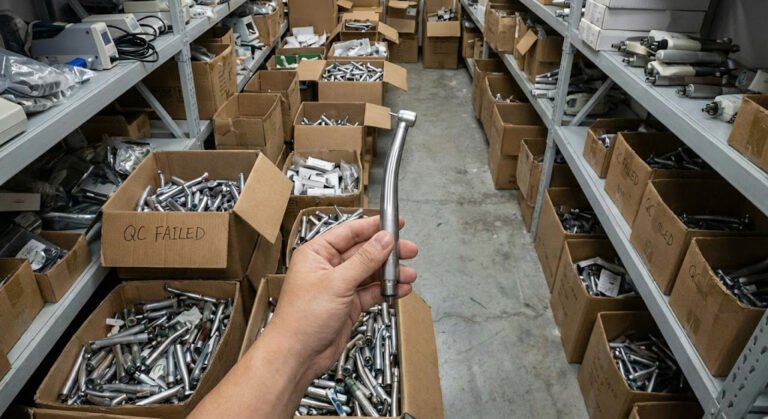
The “Golden Sample” Trap: Why Your Bulk Dental Equipment Order Doesn’t Match the Prototype
Sourcing dental equipment from China offers significant competitive advantages, but it comes with a prevalent risk known as the “Golden Sample” trap.
Read guide →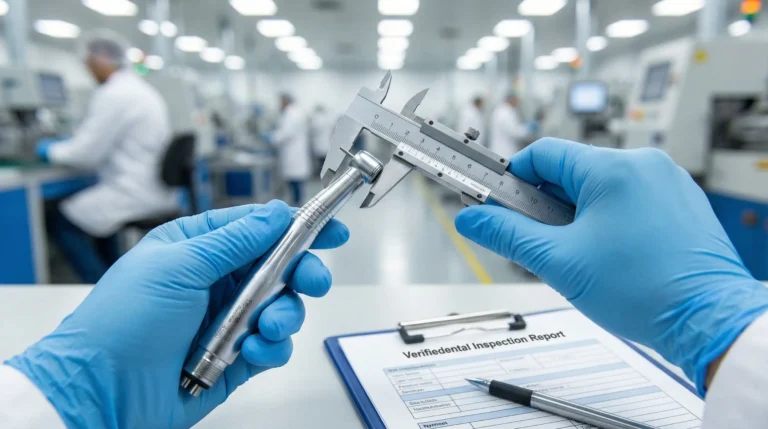
Factory or Middleman? 5 Signs Your “Manufacturer” is Actually a Trading Company
Introduction: The Illusion of the Online Factory In the digital age, sourcing dental equipment from China feels easier than ever. You browse…
Read guide →