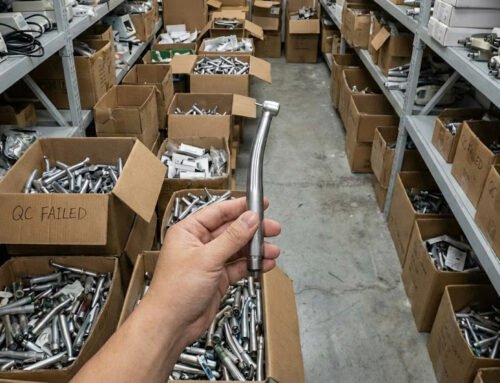
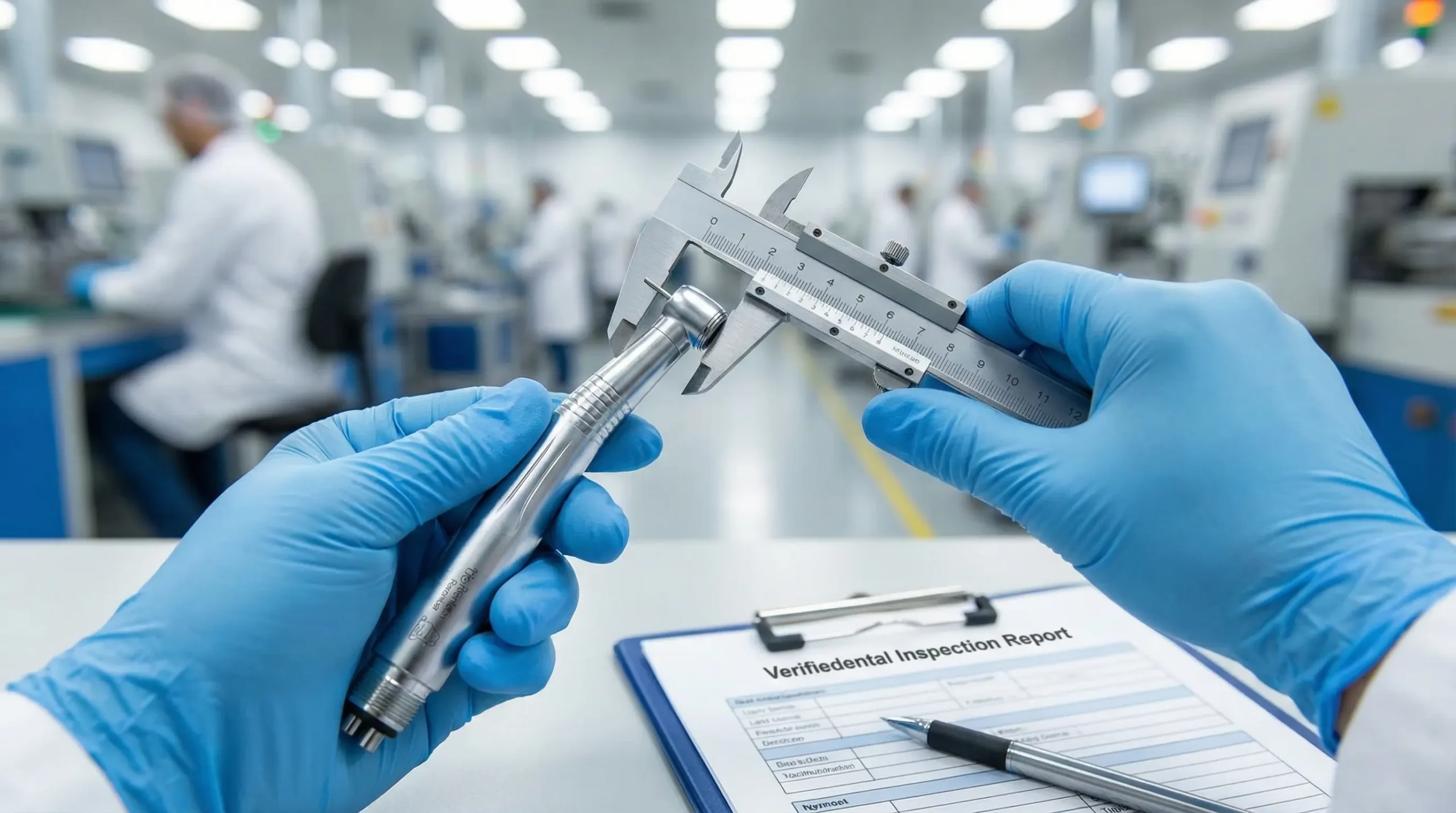
Introduction: The Illusion of the Online Factory
In the digital age, sourcing dental equipment from China feels easier than ever. You browse a sleek website, see photos of a massive factory floor, and chat with a sales representative who speaks perfect English. It looks like the real deal.
But here is the uncomfortable truth: Estimates suggest that over 40% of dental equipment suppliers on platforms like Alibaba or Made-in-China are not factories at all. They are trading companies (middlemen) disguised as manufacturers.
Does it matter? Yes.
Buying from a middleman often means paying a 30% markup, suffering from delayed communication (the “telephone game”), and—most critically—losing control over quality and warranty. When your dental chair breaks, the trading company cannot fix it; they have to ask the real factory, who may not even know you exist.
As your local team on the ground in Foshan, Verifiedental sees this every day. We have visited “factories” that turned out to be a single office in a skyscraper with nothing but a laptop and a brochure.
Before you wire your deposit, use this insider guide to determine if you are dealing with a direct manufacturer or a savvy middleman.
Why the Distinction Matters for Your Business
It is not just about the price tag. While cutting out the middleman saves you immediate margin, the long-term risks of using a trading company for critical medical equipment are substantial:
- The “Telephone Game” Effect: You tell the trader you need a specific voltage or plug. They tell the factory. The factory tells the line manager. Somewhere in this chain, information gets lost. Direct factories eliminate this noise.
- Warranty Nightmares: Trading companies often vanish when products fail. A real factory has physical assets, machinery, and a reputation to protect. They are less likely to “ghost” you over a broken PCB board.
- Regulatory Compliance: For medical devices, traceability is key. If you don’t know who actually made the device, you cannot verify CE/FDA compliance accurately.
Sign #1: The Google Maps “Industrial Zone” Test
The easiest way to spot a trading company requires zero technical skills—just Google Maps.
Most authentic dental factories in Foshan are located in specific industrial zones, such as the Nanhai Luocun Industrial Park or Shishan Industrial Zone. These areas are filled with warehouses, trucks, and dust.
How to check: Ask your supplier for their specific address in Chinese (or English). Paste it into Google Maps and switch to Satellite View.
- The Factory Profile: Do you see large, rectangular tin-roofed buildings? Are there blue trucks loading goods? Is it in a suburban area? This is likely a factory.
- The Trader Profile: Is the address in a high-rise office tower in the city center (CBD)? Is it located in a residential complex? This is almost certainly a trading company. Real factories do not assemble dental units on the 24th floor of a glass skyscraper.
- Insider Tip: If their address includes a Room Number (e.g., Room 1204, Building B), be suspicious. Factories usually occupy entire floors or standalone buildings.
Sign #2: The “Supermarket” Product Catalog
Specialization is the hallmark of a quality manufacturer. In the dental industry, production lines are specialized. A factory that makes dental units (chairs) requires heavy assembly lines, hydraulic testing stations, and upholstery departments.
A factory that makes dental burs or files requires precision CNC Swiss lathes. These are two completely different manufacturing processes.
The Red Flag: Look at their product catalog. Are they selling everything?
- Dental Chairs
- Autoclaves
- X-Ray Machines
- Cotton Rolls
- Implants
- Face Masks
No single factory in China produces all of these. If a supplier offers a “One-Stop Shop” solution, they are sourcing from multiple other factories and repackaging it under their brand. While this is convenient for buying small consumables, it is dangerous for buying major capital equipment like chairs or imaging units.
The Factory Profile: A real manufacturer will usually focus on one or two related categories (e.g., Dental Units + Compressors).
Sign #3: The “Video Call” Bluff
This is the most powerful weapon in your verification arsenal.
Trading companies rely on curated photos. They have beautiful PDFs and “factory tour” videos that were professionally shot (sometimes years ago, or borrowed from another company).
The Test: Send a message to your sales rep on WhatsApp or WeChat: “I am interested in the order, but I need to see the production line live. Can we do a video call right now for 2 minutes? I just want to say hi to the engineers.”
- The Trader’s Reaction: They will panic. They will say: “I am not at the factory today,” “The internet is bad,” or “We need to schedule this for next week.” They need time to travel to the real factory or arrange a fake background.
- The Factory’s Reaction: They might be surprised, but they will usually agree. They will walk out of their office, down the stairs, and show you the noise, the sparks, and the assembly line immediately.
Note: If they claim they are “Sales Office” separate from the “Factory,” ask to video call someone at the factory. If they can’t connect you to a colleague on the floor instantly, they don’t own the floor.
Sign #4: The Technical Knowledge Gap
Sales representatives at trading companies are hired for their English skills, not their engineering knowledge. They sell dental chairs today; they might have sold shoes last year.
Sales reps at factories, however, are surrounded by engineers and technicians daily. They absorb technical details by osmosis.
How to test them: Ask a highly specific, boring technical question that isn’t in the brochure.
- Instead of: “Is the motor good?” (They will say yes).
- Ask: “What is the brand of the solenoid valve inside the water unit? Is it 12V or 24V DC? Can you take a photo of the label for me?”
The Result: A trader will say, “I will check with the engineer and get back to you.” (They have to email the real factory). A factory rep will often know the answer, or they can walk to the warehouse and snap a photo within 10 minutes.
Sign #5: Decoding the Chinese Business License (The Ultimate Proof)
This is the most definitive method, but it requires a little bit of knowledge (or Verifiedental’s help). Every legitimate company in China has a Business License .
Ask them to send you a scan of their license. It is a public document; if they refuse, run away.
Look for the field labeled “Business Scope” . You can use Google Translate app on your phone to scan the image.
- Keywords for TRADERS: Look for words like “Wholesale” “Retail” or “Import and Export” without any mention of production.
- Keywords for FACTORIES: You must look for specific verbs: “Manufacture” , “Production” , or “Processing” .
If the license only says “Sales of Dental Equipment” but does not say “Production of Dental Equipment,” they are legally not allowed to manufacture. They are a trading company by law.
The Hybrid Model: Are All Traders Bad?
To be fair, not all trading companies are scams. In Foshan, there is a “Hybrid” model where a factory might open a separate trading company to handle export tax rebates.
Also, if you are a small clinic buying $500 worth of mixed consumables (gloves, bibs, burs), a trading company is actually better for you. They consolidate shipping and lower your MOQ (Minimum Order Quantity).
But if you are importing Dental Units, Autoclaves, or CBCT machines for resale or a large clinic project, you must go direct. The margin you save and the warranty security you gain are worth the effort.
Conclusion: Don’t Guess, Verify.
Sourcing from China is a high-reward game, but the risks of “Ghost Factories” are real. You are thousands of miles away, and internet presence can be manipulated.
You can spend hours on Google Maps and days decoding business licenses, or you can have a trusted partner do it for you instantly.
At Verifiedental, we act as your eyes and ears in Foshan. We don’t just look at websites; we walk into the factory. We check the license, interview the manager, and inspect the warehouse.
Don’t wire $50,000 to a Stranger. Before you pay your deposit, let us tell you exactly who you are dealing with.
FAQ: Common Sourcing Questions
Q: Can a trading company offer a better price than a factory?
A: Rarely for capital equipment. Sometimes, large traders bulk-buy standard units and can match factory prices, but you lose customization options. For most orders, the trader adds a 15-30% margin on top of the factory price.
Q: My supplier says they have their own factory, but the address is different. Is this normal?
A: It is possible they have a sales office in the city. However, you must insist on visiting (or video calling) the production location. If they keep the two strictly separated and refuse to show the plant, be cautious.
Q: How much does it cost to verify a supplier?
A: A plane ticket to China costs $2,000+. Verifiedental’s Supplier Verification Service starts at a fraction of that cost, providing you with a full report, photos, and legal checks within 48 hours.
Ready to Secure Your Supply Chain?
Stop guessing and start sourcing with confidence.
[Button: Verify My Supplier Now]
Get a comprehensive legal and physical audit of your potential partner before you pay.